Organizations that handle customer data must prove they protect it. Clients, partners, and regulators expect clear evidence. SOC 2 controls provide that evidence through a structured audit framework focused on security and trust.

This guide explains SOC 2 controls, real examples, and the core requirements for compliance in simple terms.

What SOC 2 Is and Why It Matters

SOC 2 is a compliance framework developed for service organizations. It evaluates how well a company protects customer data based on defined trust principles. SOC 2 does not use a fixed checklist. Instead, it measures how controls operate over time.

SOC 2 controls are especially important for SaaS providers, cloud platforms, and IT service companies. They help demonstrate accountability and reduce customer risk concerns.

A detailed overview of SOC 2 scope and applicability 

The Five Trust Service Criteria

SOC 2 controls are built around five Trust Service Criteria (TSC). Organizations select criteria based on their services and risk profile.

  1. Security – Protects systems from unauthorized access
  2. Availability – Ensures systems remain operational
  3. Processing Integrity – Confirms systems process data accurately
  4. Confidentiality – Protects sensitive business information
  5. Privacy – Manages personal data responsibly

Security is mandatory. The other criteria are optional but often included.

Complete List of Core SOC 2 Controls

SOC 2 controls are grouped by control areas rather than a fixed list. Common control categories include:

  • Logical access controls
  • Change management
  • Risk assessment
  • System monitoring
  • Incident response
  • Vendor management
  • Data encryption
  • Backup and recovery

Each control must align with at least one Trust Service Criterion. The focus stays on effectiveness, not documentation alone.

SOC 2 Control Examples in Practice

Understanding examples helps clarify how SOC 2 controls work in real operations.

  • Access Control: Role-based access limits system permissions
  • Change Management: Code changes require approval and testing
  • Monitoring: Logs track system activity and alert on anomalies
  • Incident Response: Defined steps guide breach handling
  • Vendor Security: Third-party risk assessments are reviewed regularly

These examples show how SOC 2 controls integrate into daily workflows.

SOC 2 Compliance Requirements Explained

SOC 2 compliance requires more than policies. Organizations must prove controls are designed and operating effectively.

Key requirements include:

  • Defined control objectives
  • Documented policies and procedures
  • Evidence of control operation
  • Management oversight
  • Independent auditor review

SOC 2 Type I reviews design at a point in time. SOC 2 Type II evaluates performance over a period, usually six to twelve months.

A clear explanation of SOC reports and their differences 

How Long SOC 2 Compliance Takes

SOC 2 timelines depend on readiness, scope, and internal maturity. Companies with strong security practices move faster. Others need time to implement missing controls.

A realistic breakdown of preparation and audit timelines  

Planning early helps avoid rushed audits and control gaps.

How SOC 2 Improves Security and Compliance

SOC 2 controls strengthen internal discipline. They reduce security incidents, improve monitoring, and clarify accountability. Compliance also improves customer confidence and sales cycles.

The broader impact of SOC compliance on security posture is explained here:

SOC 2 compliance supports long-term risk management, not just audits.

How Prowise Systems Helps With SOC 2 Compliance

Prowise Systems helps organizations implement SOC 2 controls in a structured and practical way. Their approach focuses on risk clarity, control alignment, and audit readiness.

Prowise Systems works directly with clients through consultations and guided sessions. They help define scope, select Trust Service Criteria, design controls, and prepare audit evidence. Their services include gap analysis, control implementation, internal readiness reviews, and audit coordination.

Clients interact with experienced consultants who explain requirements in simple language. This reduces confusion and helps teams meet SOC 2 compliance goals without unnecessary effort.

Conclusion

SOC 2 controls provide a clear framework to protect customer data and prove trust. They focus on how systems operate, not just what policies exist. By aligning controls with real risks, organizations strengthen security and credibility.

SOC 2 compliance requires planning, evidence, and continuous monitoring. With the right approach and expert support, SOC 2 controls become part of daily operations rather than an audit burden.

FAQs

1. What are SOC 2 controls in simple terms?

SOC 2 controls are policies and processes that show how an organization protects customer data. They cover areas like access control, monitoring, incident response, and vendor management. SOC 2 controls prove that security practices work in real operations, not just on paper.

2. Are SOC 2 controls mandatory for all companies?

No. SOC 2 controls are not legally mandatory. However, many customers, partners, and enterprises require SOC 2 compliance before doing business. For SaaS and cloud service providers, SOC 2 controls often become a commercial requirement.

3. What is the difference between SOC 2 Type I and Type II?

SOC 2 Type I evaluates whether controls are designed correctly at a specific point in time. SOC 2 Type II evaluates whether those controls operate effectively over a defined period, usually six to twelve months. Most customers prefer SOC 2 Type II reports.

4. How long does it take to implement SOC 2 controls?

Implementation time depends on company size, existing security practices, and audit scope. Many organizations need two to four months to prepare controls before the audit period begins. Early planning reduces rework and audit delays.

5. Who is responsible for maintaining SOC 2 controls?

SOC 2 controls require shared responsibility. Management defines oversight, IT teams manage technical controls, and employees follow security procedures. Ongoing reviews and evidence collection help maintain SOC 2 compliance over time.

If you are planning compliance for your organization, one of the first questions you will ask is how long does a SOC 2 audit take. The answer depends on the audit type, your readiness level, and how well your controls are documented. This guide explains timelines clearly, without jargon, so you know what to expect and how to prepare.

What Is a SOC 2 Audit?

A SOC 2 audit checks how well your organization protects customer data. It is based on the Trust Services Criteria: security, availability, processing integrity, confidentiality, and privacy.

SOC 2 is not a one-day event. It is a structured process that reviews policies, systems, and evidence. Understanding the scope early helps reduce delays and confusion later.

How Long Does a SOC 2 Audit Take on Average?

On average, how long does a SOC 2 audit take depends on whether you choose Type I or Type II.

  • SOC 2 Type I: 4 to 8 weeks
  • SOC 2 Type II: 3 to 6 months

Type I reviews controls at a single point in time. Type II checks how those controls perform over a defined period. This monitoring period makes Type II longer.

If your organization is well prepared, timelines stay predictable. If not, delays are common.

Key Phases That Affect SOC 2 Audit Duration

To fully understand how long does a SOC 2 audit take, you must look at each phase.

Readiness Assessment (2–4 weeks)

This step identifies gaps before the formal audit. It reviews policies, access controls, incident response, and vendor management. Companies that skip readiness often face rework later.

Control Implementation (4–12 weeks)

If gaps exist, controls must be fixed. This includes documentation, technical changes, and staff training. Mature systems move faster here.

Evidence Collection (2–4 weeks)

Auditors request proof. This includes logs, screenshots, policies, and reports. Organized teams complete this step quickly.

Audit Review and Report (2–3 weeks)

Auditors validate evidence and issue the SOC report. Delays usually happen if evidence is incomplete.

SOC 2 Type I vs Type II: Time Difference

Many teams underestimate this difference when asking how long does a SOC 2 audit take.

Audit Type

Time Required

Best For

SOC 2 Type I

1–2 months

Early-stage companies

SOC 2 Type II

3–6 months

SaaS, enterprises, regulated sectors

Type II offers stronger assurance, but it demands discipline over time.

What Factors Can Delay a SOC 2 Audit?

Several issues slow audits:

  • Missing or outdated policies
  • Weak access controls
  • No incident response plan
  • Poor vendor risk management
  • Limited internal ownership

These problems are common but avoidable. Clear planning keeps the audit on track.

How Prowise Systems Helps Reduce SOC 2 Timelines

Before concluding how long does a SOC 2 audit take, it is important to understand how expert support changes the timeline.

Prowise Systems helps organizations prepare, implement, and complete SOC 2 audits without confusion or wasted effort. Their SOC 2 services focus on readiness, gap analysis, documentation, and auditor coordination.

They guide businesses through SOC 2 requirements step by step, using proven frameworks aligned with SOC reporting standards. Teams get clear action plans instead of generic checklists.

Prowise Systems also supports organizations that are new to SOC compliance by explaining what SOC reports are, why they matter, and how they improve security and compliance posture. Their approach reduces audit back-and-forth and prevents last-minute surprises.

With structured support, companies often complete SOC 2 faster and with fewer revisions.

Can You Speed Up a SOC 2 Audit?

Yes. If you plan correctly, how long does a SOC 2 audit take becomes more predictable.

You can reduce time by:

  • Completing a readiness assessment early
  • Assigning one internal owner
  • Using standardized evidence templates
  • Fixing gaps before the audit starts
  • Working with experienced SOC consultants

Speed comes from clarity, not shortcuts.

Final Thoughts

So, how long does a SOC 2 audit take? For most organizations, it ranges from one month to six months, depending on audit type and preparation. Companies that invest in readiness and expert guidance finish faster and with better results.

SOC 2 is not just a compliance task. It is a signal of trust, maturity, and operational discipline. Planning early makes all the difference.

FAQs

How much do SOC 2 auditors make?

SOC 2 auditors typically earn higher fees than general IT auditors due to the technical scope and compliance expertise required. Costs vary by region, audit firm, and audit type.

What happens during a SOC 2 audit?

Auditors review your controls, test evidence, interview staff, and validate system security. They then issue a SOC report based on findings.

Can you fail a SOC 2 audit?

There is no formal “fail.” However, gaps are reported. Too many issues can reduce trust with clients and partners.

How long does a cybersecurity audit take?

A general cybersecurity audit may take 2 to 6 weeks. SOC 2 audits take longer due to structured evidence and reporting requirements.

Also Read : How SOC Certification Improves Security and Compliance for Your Organization

Most businesses rely on cloud platforms and digital tools to manage operations. This shift makes security and trust more important than ever. A SOC report helps organizations show clients, partners, and auditors that their systems are secure and compliant. If you want a clear and simple explanation, this guide covers everything you need to know about SOC reports, SOC compliance, and the types of SOC reports used today.

What Is a SOC Report?

A SOC report is an official document that explains how a company manages security, availability, confidentiality, and data processing. It comes from an independent audit. The report builds trust because it shows that your business follows strict controls. Companies working with financial data, customer information, or cloud services often need a SOC report to prove they follow industry standards.

A SOC report helps avoid risk by showing how systems work, how threats are handled, and how processes stay consistent. Most clients ask for a SOC report before working with a vendor, so it has become a basic requirement for many industries.

Types of SOC Reports

There are three main types of SOC reports. Each one focuses on a different need.

1. SOC 1

A SOC 1 report focuses on financial controls. Companies that process payroll, billing, or financial data use SOC 1. It helps clients understand how you protect financial information and maintain accuracy. A SOC 1 report is often required by auditors during financial reviews.

2. SOC 2

SOC 2 reports are the most common today. These focus on the Trust Service Criteria: security, availability, processing integrity, confidentiality, and privacy. Cloud providers, IT firms, SaaS businesses, and service companies rely on SOC 2 to show they handle data responsibly. SOC 2 is a key part of SOC compliance because it tests real controls in your system.

Prowise Systems explains this in detail in its resource on how SOC certification improves security and compliance for your organization. Their content breaks down the benefits clearly for beginners and decision-makers.

3. SOC 3

SOC 3 is a simplified version of SOC 2. It is public and easy to share. It does not include deep technical details but proves that your company meets SOC 2 requirements. Many companies publish SOC 3 reports on their websites for customer trust.

What Is SOC Compliance?

SOC compliance means your business follows strict standards for security and data handling. It requires proper policies, documentation, monitoring, and testing. SOC compliance is not a one-time event. It needs regular updates and continuous improvement so your controls stay effective.

A SOC report verifies your compliance. Without strong compliance, a SOC report may expose gaps, which can affect client trust. Many companies work with consultants to prepare for SOC audits because compliance involves technology, process, and documentation.

Prowise Systems offers clear guidance on SOC compliance through its page on SOC 2, explaining each requirement in simple terms.

Why SOC Reports Matter

SOC reports help companies:

  • Build trust with clients
  • Show transparent security practices
  • Reduce risk from data breaches
  • Strengthen internal processes
  • Meet regulatory and industry expectations

Clients want assurance. A SOC report gives that assurance through evidence, not promises. It shows the exact controls in place and how they were evaluated.

Sample SOC Report

A sample SOC report usually contains:

  • Executive summary
  • System description
  • Control objectives
  • Detailed testing results
  • Auditor’s opinion
  • Management’s response

The structure is simple and technical, but the purpose is clear: prove that the company meets the required standards. Sample SOC reports help organizations understand what to expect before starting an audit. Reviewing a sample SOC report also helps teams prepare documentation and fix gaps early.

How Prowise Systems Helps Organizations with SOC Compliance

Prowise Systems supports organizations through the full SOC journey. Their team works with businesses at different stages, whether they are preparing for a first audit or improving existing controls.

Here is how they help:

1. SOC Readiness Assessments

They review your current systems, policies, and controls. This helps identify gaps early so the audit goes smoothly. Their readiness process is based on real SOC requirements, not generic checklists.

2. SOC 2 Implementation and Consulting

Prowise Systems offers SOC 2 consulting services in Canada and other regions. Their guidance is practical and rooted in industry standards. They help with documentation, control setup, risk assessments, and training. Their page on SOC 2 consultant in Canada explains their involvement in detail.

3. Ongoing Compliance Support

SOC compliance needs continuous updates. Prowise Systems helps maintain controls, monitor risks, and prepare for future audits. This reduces stress and saves time for internal teams.

Their services are designed to be simple, clear, and effective so organizations stay compliant without confusion. They focus on security, process improvement, and long-term trust.

Conclusion

A SOC report is an essential tool for any business that handles sensitive or financial data. It proves your systems are secure, reliable, and compliant. Understanding SOC reports, the types of SOC reports, and the basics of SOC compliance helps companies prepare for audits and build trust with clients. A sample SOC report offers a preview of what auditors expect, which can guide your preparation.

If your organization wants to complete SOC 2 or improve compliance, Prowise Systems provides support through readiness assessments, consulting services, and ongoing compliance management. Their clear approach helps businesses move through the SOC process with confidence.

SOC reports are not only about meeting requirements; they are about showing clients that your business values security. By focusing on strong controls and transparency, you create trust that lasts.

FAQs

1. What is SOC 1, SOC 2, and SOC 3?

SOC 1 focuses on financial reporting controls. SOC 2 reviews controls related to security, availability, processing integrity, confidentiality, and privacy. SOC 3 is a public version of SOC 2 with high-level details meant for general sharing.

2. What is a Type 1 and Type 2 SOC report?

A Type 1 report checks if controls are designed correctly at a specific point in time.
A Type 2 report checks the design and operating effectiveness of controls over a period, usually 6 to 12 months.

3. What is the SOC full form?

SOC stands for System and Organization Controls. It is a framework used to assess and report on security and compliance practices.

In today’s cybersecurity landscape, businesses are expected to demonstrate strong data protection, reliable internal controls, and compliance with global standards. SOC Certification—including SOC 1, SOC 2, and SOC 3—gives organizations a trusted way to show they follow secure, consistent, and audit-ready processes. It strengthens credibility, reduces risks, and builds customer trust.

In this guide, you’ll learn why SOC Certification matters, how it works, and how Prowise Systems helps businesses achieve SOC 2 readiness and certification across the USA, Canada, UAE, and other regions.

Why SOC Certification Matters

1. Builds Trust With Customers

Clients expect transparency and strong controls.
A SOC report proves that your organization follows recognized security and compliance standards. This improves trust and accelerates vendor onboarding.

2. Strengthens Internal Controls

SOC readiness highlights gaps in documentation, workflows, monitoring, and governance.
Fixing these gaps improves operational consistency and reduces day-to-day risks.

3. Supports Regulatory & Industry Compliance

Industries like SaaS, fintech, healthcare, cloud services, and IT outsourcing must meet strict compliance expectations.

SOC Certification provides evidence for:

  • Vendor security reviews
  • Client due diligence
  • Regulatory compliance
  • Contractual requirements

4. Reduces Security Risks

With rising cyber threats, organizations need strong technical and administrative controls.
SOC Certification guides the implementation of secure processes that reduce vulnerabilities and improve system reliability.

5. Enhances Market Reputation

Organizations with SOC reports stand out.
It improves brand credibility and helps win enterprise clients who require proof of security compliance.

Types of SOC Reports

SOC 1

Focused on internal controls over financial reporting.

SOC 2

Covers the five Trust Services Criteria:

  • Security
  • Availability
  • Confidentiality
  • Privacy
  • Processing Integrity

Ideal for: SaaS companies, data centers, IT service providers, BPOs, and cloud platforms.

SOC 3

Similar to SOC 2 but designed for public distribution for marketing and transparency.

How the SOC Certification Process Works

1. SOC Readiness Assessment

A detailed review of your existing processes, documentation, and technical controls to identify gaps.

2. Remediation Phase

Fixing gaps by updating processes, policies, access controls, monitoring, logging, and governance systems.

3. Audit Execution

An independent CPA firm audits your controls against SOC standards.

4. Final SOC Report

You receive an official report with results, findings, and recommendations.

5. Continuous Improvements

SOC requires ongoing monitoring, documentation, and annual re-evaluations to maintain compliance.

How Prowise Systems Helps You Achieve SOC Certification

End-to-End SOC 2 Consulting Services

Prowise Systems provides complete guidance throughout the SOC journey:

SOC 2 Readiness Assessment

Gap analysis across people, processes, and technology.

Compliance & Governance Consulting

Development of policies, procedures, and internal controls.

Security & IT Governance Support

Implementation guidance for endpoint security, IAM, cloud configurations, network controls, and monitoring.

Audit Documentation & Support

Preparation of evidence, risk registers, logs, configs, and auditor communications.

Post-Audit Assistance

Support with observations, improvements, and continuous compliance activities.

Region-Specific SOC 2 Consulting

Prowise Systems provides localized compliance guidance:

This helps organizations meet region-specific requirements, auditor expectations, and local industry practices.

How Clients Work With Prowise Systems

The engagement is simple:

  1. Initial Consultation
    Understanding your organization, industry, and compliance goals.

  2. Scope & Requirement Study
    Identifying systems, boundaries, and Trust Service Criteria.

  3. Roadmap Creation
    A clear plan for SOC readiness, remediation, and audit preparation.

  4. Full Implementation Support
    Guidance through controls, documentation, governance, and audit evidence.

  5. Audit Coordination
    End-to-end support until completion of the SOC Certification.

Conclusion

Security and compliance are now essential for business success. SOC Certification provides a trusted framework that strengthens data protection, builds customer confidence, and positions your business for long-term growth.

With Prowise Systems as your compliance partner, you gain expert guidance, clear documentation, smooth implementation, and a stress-free certification journey.

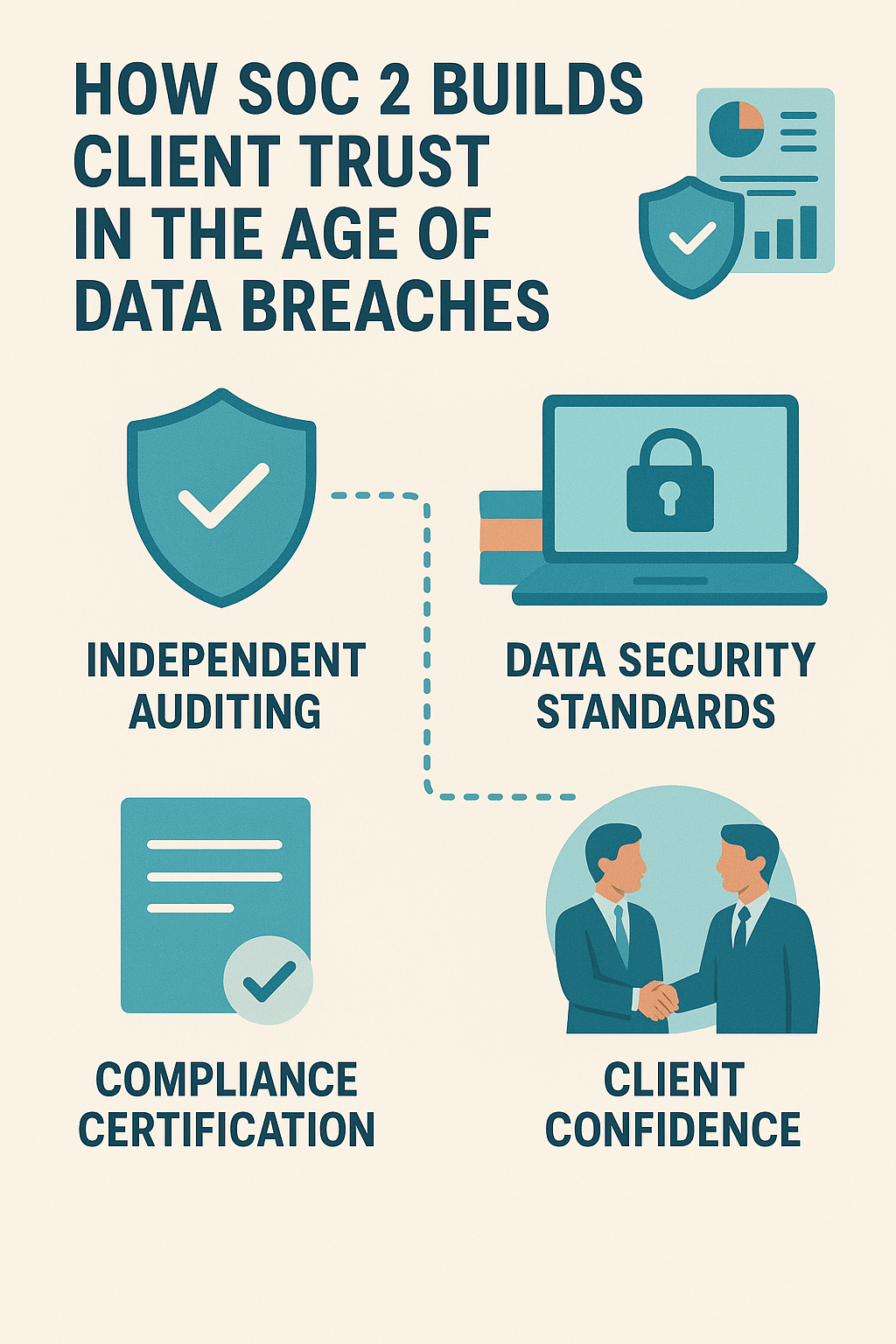
Data breaches are frequent, and clients no longer settle for promises about security. They expect evidence. This is why SOC 2 certification has become a standard for service providers. It confirms that systems follow strict security, privacy, and integrity rules. In the age of constant threats, SOC 2 compliance is more than a technical step—it is a foundation for client trust.

Why SOC 2 Matters in a Breach-Heavy World

Every business handles sensitive client information. Without proper controls, the risk of leaks is high. SOC 2 audits check whether an organization protects its information. Auditors test access policies, monitoring tools, and data handling methods. Completing this process demonstrates that a company meets the requirements for SOC 2 certification.

Clients choose vendors with SOC 2 certification because they view it as a sign of reliability. A provider that invests in SOC 2 compliance demonstrates that protecting client data is integral to its culture, not just a statement on a website.

The Role of SOC 2 Audit and Tracking

A SOC 2 audit is more than paperwork. It examines five principles: security, availability, processing integrity, confidentiality, and privacy. Companies cannot simply self-declare; they must pass independent checks.

SOC 2 audit tracking helps businesses stay on top of these controls. Instead of waiting for an annual audit, tracking systems continuously monitor compliance. This reduces surprises during the subsequent SOC 2 assessment and demonstrates to clients that safeguards are consistently in place. For clients, this builds confidence that the provider is not reactive but proactive.

How SOC 2 Certification Builds Trust

1. Verified Controls

Independent auditors confirm compliance, not the company itself. This makes the SOC 2 certification process a trusted source of assurance.

2. Ongoing Monitoring

With SOC 2 audit tracking, organizations can identify and address risks early. Clients recognize that compliance is not a temporary but a continuous process.

3. Competitive Edge

Many contracts now require SOC 2 compliance. Businesses without it often lose bids. Certification gives companies a clear advantage.

4. Transparent Reports

SOC 2 assessments produce detailed reports. Clients gain clarity on how their data is managed, rather than vague promises.

Preventing Data Breaches Through SOC 2 Compliance

SOC 2 does not stop all breaches, but it reduces exposure:

  • Security: Encryption, firewalls, and access limits block intrusions.
  • Audit Tracking: Continuous monitoring flags unusual activity before it spreads.
  • Data Integrity: Controls ensure records are accurate and unchanged.
  • Confidentiality: Sensitive client files remain private under strict controls.

These steps, verified through regular SOC 2 audits, protect both clients and providers. The result is higher trust and fewer disruptions.

How Prowise Systems Helps

Many companies are unsure how to start. Prowise Systems

 offers expert guidance for organizations preparing for SOC 2 certification. Their team designs strategies, fills compliance gaps, and manages audit readiness.

Through their SOC 2 consulting services, businesses receive:

  • Step-by-step planning for SOC 2 compliance.
  • Support with SOC 2 audit tracking and documentation.
  • Training on how to respond to auditor questions.

Prowise streamlines SOC 2 assessments, enabling companies to gain certification more efficiently and build trust with their clients.

Responding to Client Questions with SOC 2 Certification

Clients often ask:

  • How is my data protected?
  • Who can access my files?
  • What happens if systems fail?

With SOC 2 certification, answers are backed by proof. Providers can show audit reports instead of vague claims. This shifts the conversation from risk to confidence.

Businesses with SOC 2 compliance demonstrate accountability and transparency. Regular SOC 2 assessments and audit tracking demonstrate that data protection is not a one-time effort—it is an ongoing process.

Conclusion

SOC 2 certification helps businesses prove they take client trust seriously. Through independent SOC 2 audits, daily audit tracking, and repeat SOC 2 assessments, companies reduce risks and build long-term relationships.

Clients want service providers who value accountability. With the help of Prowise Systems, achieving and maintaining SOC 2 compliance is clear, structured, and effective. In a world filled with data breaches, SOC 2 is not optional—it is the key to trust.