Every business depends on information. Customer records, employee data, contracts, financial reports, intellectual property, and business plans all contribute to an organization’s success. If this information is lost, stolen, or altered without authorization, the consequences can include financial loss, legal issues, operational disruption, and damage to customer trust.
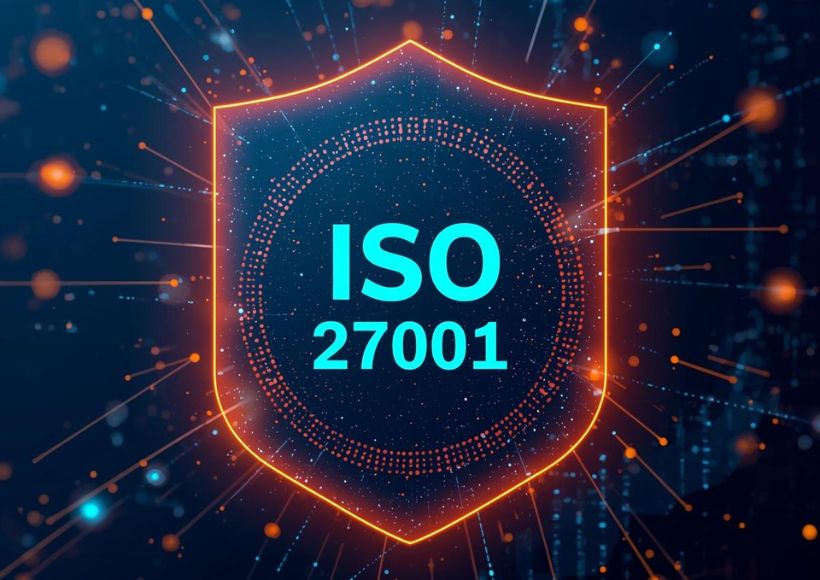
ISO 27001 provides a structured way to protect this information. Rather than relying on isolated security tools, it helps organizations create a complete Information Security Management System (ISMS) that continuously identifies risks, applies appropriate controls, and improves security over time.
Understanding the Logic Behind ISO 27001
The basic principle of ISO 27001 is simple:
You cannot protect everything equally, so you must protect what matters most based on risk.
Instead of applying every possible security control, ISO 27001 requires organizations to first understand:
What information they own
Where that information is stored
Who has access to it
What could go wrong
How serious the consequences would be
Once these questions are answered, organizations implement security controls that are appropriate for their specific risks.
This risk-based approach makes ISO 27001 practical for organizations of every size, from small businesses to multinational enterprises.
Information Security Is More Than Technology
Many people assume information security is only about firewalls, antivirus software, or encryption. While technology is important, most security incidents involve people, processes, or poor management practices.
For example, a company may have advanced cybersecurity software, but an employee accidentally emails confidential customer information to the wrong recipient. In another case, sensitive documents might be left unlocked in a meeting room, or a former employee may still have access to company systems after leaving the organization.
ISO 27001 addresses all of these situations by combining technology, documented procedures, employee awareness, and management oversight into one integrated management system.
The Three Foundations of Information Security
Every requirement within ISO 27001 supports one or more of three core objectives.
Confidentiality
Information should only be accessible to people who are authorized to use it.
For example, payroll information should only be available to HR and authorized finance personnel, while customer contracts may only be accessible to the sales and legal teams.
Integrity
Information must remain complete, accurate, and protected from unauthorized modification.
Version control, approval workflows, and audit logs help ensure that important business records cannot be changed without proper authorization.
Availability
Information must remain accessible whenever authorized users need it.
Regular backups, disaster recovery planning, redundant infrastructure, and business continuity measures help organizations continue operating even during unexpected events.
How Risk Assessment Works
Risk assessment is the heart of ISO 27001.
Rather than assuming every asset requires the same level of protection, organizations evaluate each asset individually.
A typical assessment includes:
Identifying important information assets
Determining potential threats
Identifying vulnerabilities
Evaluating the likelihood of an incident
Assessing the business impact
Selecting appropriate controls
Example
Imagine a company stores customer information in a cloud-based CRM system.
Potential risks might include:
Unauthorized access
Phishing attacks
Weak passwords
Human error
Service outages
To reduce these risks, the organization could implement multi-factor authentication, role-based access controls, employee awareness training, encrypted backups, and regular security reviews.
This illustrates how ISO 27001 focuses on reducing real business risks instead of applying unnecessary controls.
Security Controls Support the Business
ISO 27001 includes a comprehensive set of security controls covering areas such as:
Information access management
Asset inventory
Cryptography
Physical security
Supplier management
Incident response
Backup and recovery
Human resource security
Secure system development
Organizations only implement controls that are appropriate for their identified risks.
This ensures that security supports business operations rather than creating unnecessary complexity.
Continuous Improvement Is Essential
Information security is not a one-time project.
New technologies, changing regulations, cyber threats, and business growth constantly introduce new risks.
ISO 27001 addresses this through the Plan-Do-Check-Act (PDCA) model.
Plan
Identify risks, define objectives, and select suitable controls.
Do
Implement policies, procedures, and technical safeguards.
Check
Conduct internal audits, monitor security performance, and review incidents.
Act
Correct weaknesses, improve processes, and strengthen the management system.
By repeating this cycle, organizations continuously improve their security posture instead of reacting only after incidents occur.
Business Benefits Beyond Compliance
Although many organizations pursue ISO 27001 to meet customer or regulatory requirements, the benefits extend much further.
A well-implemented Information Security Management System can help organizations:
Reduce the likelihood of security incidents
Improve customer confidence
Demonstrate commitment to information security
Support legal and contractual compliance
Improve employee awareness of security responsibilities
Strengthen supplier and partner confidence
Improve business continuity during disruptions
Over time, these improvements contribute to stronger operational resilience and better business performance.
How Prowise Systems Helps
Implementing ISO 27001 successfully requires more than creating documentation. It requires understanding how information flows through the organization and where genuine risks exist.
Prowise Systems works with businesses to design Information Security Management Systems that reflect real operational needs. The consulting approach includes defining the certification scope, identifying information assets, conducting risk assessments, selecting appropriate controls, preparing documentation, training employees, performing internal audits, and supporting organizations through the certification audit.
The goal is to build a practical management system that protects business information while remaining easy to maintain and continually improve.
Conclusion
The strength of ISO 27001 lies in its practical, risk-based approach to information security. Instead of treating every asset the same, organizations identify what matters most, understand the risks, and implement controls that are appropriate for their business.
When information security becomes part of everyday operations rather than a standalone IT activity, organizations are better prepared to prevent incidents, respond to emerging threats, and maintain the trust of customers, employees, and business partners.
Frequently Asked Questions
What is the main objective of ISO 27001?
The primary objective of ISO 27001 is to establish a structured Information Security Management System (ISMS) that helps organizations identify information security risks, implement suitable controls, and continually improve their security practices.
Is ISO 27001 suitable for small businesses?
Yes. ISO 27001 is designed for organizations of all sizes. Small businesses can implement the standard by selecting controls that are appropriate for their specific risks and operational requirements.
Does ISO 27001 only focus on cybersecurity?
No. While cybersecurity is an important part of ISO 27001, the standard also covers physical security, employee awareness, supplier management, documentation, business continuity, and governance.
How often should risks be reviewed?
Organizations should review risks regularly and whenever significant changes occur, such as introducing new technology, expanding operations, changing suppliers, or responding to security incidents.
Why is continuous improvement important in ISO 27001?
Cyber threats, business processes, and regulatory requirements continue to evolve. Continuous improvement ensures that the Information Security Management System remains effective, relevant, and aligned with organizational objectives.