Introduction
Growth changes everything. As businesses scale, they collect more customer data, onboard more employees, adopt more cloud systems, and expand into new markets. With that growth comes greater exposure. Cyber threats increase, enterprise clients demand proof of security, and investors begin to examine operational risk more closely.
For growing companies, information security is no longer optional. It becomes a strategic priority. This is where ISO 27001 certification moves from being a compliance exercise to becoming a business enabler.
Why Growth Increases Security Risk
Early-stage companies often operate with informal security controls. A small team manages access manually. Policies are limited. Documentation is minimal.
But as growth accelerates, complexity increases:
- More users accessing sensitive systems
- Remote and hybrid workforce environments
- Third-party vendors and SaaS integrations
- Expanding volumes of customer and financial data
Each of these adds to the organization’s attack surface. What worked at ten employees rarely works at one hundred. Without a structured framework, security gaps begin to appear.
Growing businesses are attractive targets because attackers assume controls are immature. One breach at this stage can disrupt momentum, damage brand credibility, and slow expansion plans.
The Business Impact of Weak Security
Weak security is not just an IT issue. It is a revenue risk.
Many enterprise clients now require ISO 27001 certification during vendor evaluation. If a growing company cannot demonstrate a mature security posture, it may lose large contracts before negotiations even begin.
Investors also conduct security due diligence before funding rounds or acquisitions. A lack of structured information security controls can delay deals or reduce valuation.
Beyond lost opportunities, regulatory penalties and reputational damage create long-term consequences. Recovering from a breach is significantly more expensive than preventing one.
What ISO 27001 Really Provides
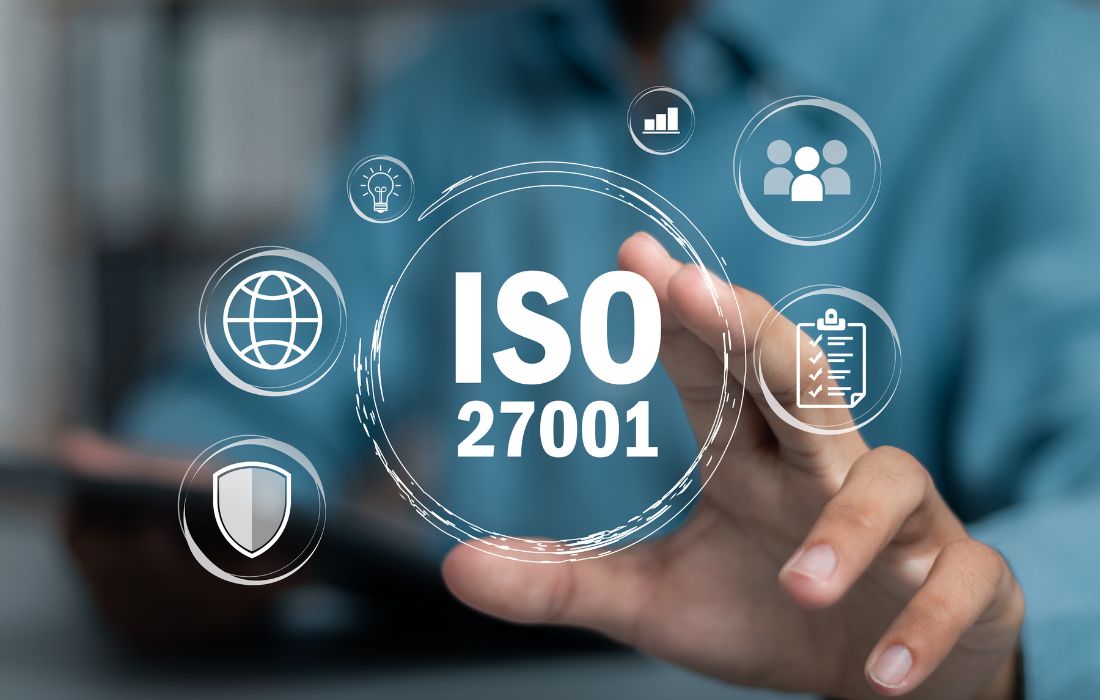
ISO 27001 is an internationally recognized standard for building an Information Security Management System (ISMS).
At its core, it introduces discipline into how an organization manages information security. It is not about isolated tools or ad-hoc controls. It is about structured governance.
Key components include:
- Risk identification and assessment
- Defined security policies and procedures
- Access control management
- Incident response planning
- Continuous monitoring and improvement
This framework ensures that security becomes embedded into daily operations rather than treated as an afterthought.
How ISO 27001 Protects Revenue
For growing companies, ISO 27001 does more than reduce risk. It supports revenue growth.
Enterprise procurement teams increasingly prioritize vendors with certified security frameworks. ISO 27001 signals credibility. It reduces friction in sales cycles. It builds confidence during contract negotiations.
In competitive markets, this certification can differentiate a business from others that rely only on informal security practices.
When organizations demonstrate certified governance, clients move forward faster. That acceleration directly impacts revenue and expansion potential.
Investor and Enterprise Expectations in 2026
Security maturity is now a core component of strategic evaluation. Investors are no longer satisfied with verbal assurances about data protection. They expect documented frameworks, structured risk management processes, and clear audit readiness.
ISO 27001 demonstrates that leadership understands organizational risk and has implemented formal controls to manage it effectively. This significantly reduces perceived operational and compliance uncertainty.
For enterprises seeking long-term partnerships, certified security frameworks provide measurable assurance that sensitive information will be consistently protected.
In 2026 and beyond, companies that cannot demonstrate formal security governance may struggle to compete in enterprise markets, secure funding, or maintain strategic partnerships.
When a Growing Business Should Start ISO 27001
Timing matters.
Organizations often consider ISO 27001 after losing an enterprise deal or facing client security questionnaires they cannot confidently answer. By then, the process becomes reactive.
A better approach is proactive implementation during growth phases, especially:
- Before entering enterprise markets
- Prior to raising Series A or Series B funding
- When expanding into international regions
- When handling sensitive client or financial data
Starting early allows the company to build structured controls without operational disruption.
Common Misconceptions About ISO 27001
Some growing businesses hesitate because of misconceptions.
One common belief is that ISO 27001 is only for large enterprises. In reality, it is scalable and adaptable to organizations of different sizes.
Another misconception is that it is purely documentation. While documentation is required, the real value lies in operational discipline and risk management.
Cost is also often misunderstood. The investment in structured security is small compared to the financial and reputational damage of a breach or lost enterprise opportunity.
Strategic Value Beyond Compliance
ISO 27001 should not be viewed as a checkbox exercise. It strengthens governance maturity. It formalizes accountability. It aligns leadership with security objectives.
Over time, organizations with structured ISMS frameworks operate more efficiently. They respond to incidents faster. They manage risk more effectively. They build stronger stakeholder trust.
For growing businesses, this maturity becomes a competitive asset.
Secure Your Growth with ISO 27001 Leadership
Growing securely requires more than policies and documentation. It demands structured risk management, leadership alignment, and expert execution.
If your organization is preparing to scale, enter enterprise markets, or strengthen investor confidence, this is the right time to act.
Prowise Systems works with growing businesses to design, implement, and manage ISO 27001 frameworks that align security with strategic business objectives. From gap assessment to certification readiness and audit support, our team ensures a controlled, efficient, and results-driven approach.
Connect with Prowise Systems to begin building a resilient, audit-ready information security framework that supports long-term growth and enterprise trust.
Conclusion
As companies scale, their exposure to cyber threats, enterprise scrutiny, and investor evaluation increases. Informal security practices are no longer sufficient.
ISO 27001 provides the structure, credibility, and resilience required for sustainable expansion. It protects revenue, strengthens valuation, and builds long-term trust.
For growing businesses, ISO 27001 certification is not just about compliance. It is about building a secure foundation for scalable success.
FAQs
Why is ISO 27001 important for businesses?
ISO 27001 is important because it helps businesses systematically manage information security risks. It strengthens data protection, builds client trust, reduces breach risk, and improves credibility during enterprise evaluations and investor due diligence
What is a major benefit of ISO 27001 certification?
A major benefit of ISO 27001 certification is increased trust and credibility. It demonstrates that the organization has a structured and audited approach to managing information security risks.
Which companies need ISO 27001?
Companies that handle sensitive customer data, operate in regulated industries, work with enterprise clients, or plan to scale internationally should consider ISO 27001. It is especially relevant for IT services, SaaS companies, fintech firms, healthcare providers, and government contractors.
Is ISO 27001 mandatory?
ISO 27001 is not legally mandatory in most countries. However, many enterprise clients and regulated sectors require it as part of vendor qualification, making it practically essential for businesses targeting large contracts.