
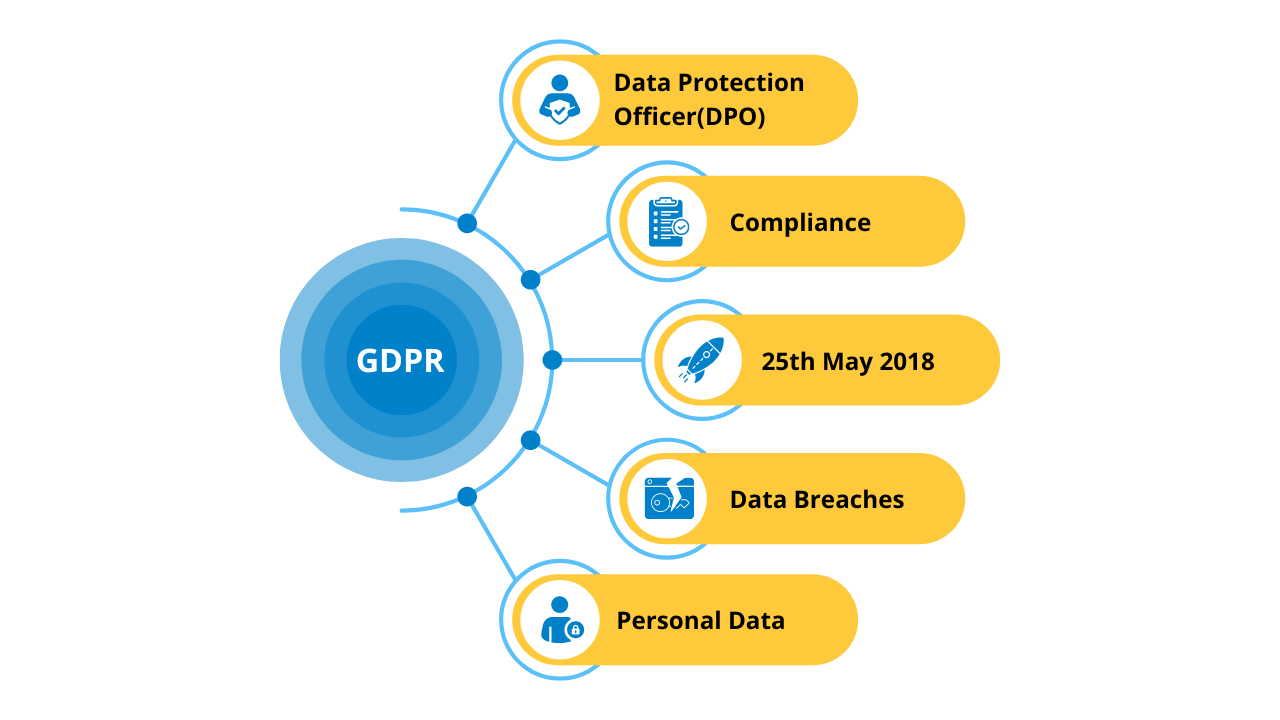
Data privacy is no longer just a legal requirement—it has become a business necessity. As organizations continue to collect and process large amounts of personal data, maintaining compliance with the General Data Protection Regulation (GDPR) remains critical in 2026.
With increasing cybersecurity threats, stricter privacy expectations, and evolving regulatory scrutiny, businesses must adopt a proactive approach to data protection. Companies that fail to comply with GDPR risk financial penalties, operational disruptions, and reputational damage.
To help organizations stay compliant and improve their privacy practices, here is your go-to 12-step GDPR compliance checklist for 2026.
GDPR Compliance Checklist for 2026 (Quick Overview)
A GDPR compliance checklist helps businesses ensure they properly collect, process, store, and protect personal data according to GDPR requirements.
The key focus areas include:
- Data mapping
- Consent management
- Security controls
- Vendor assessments
- Employee awareness
- Data breach response planning
Organizations that continuously improve these areas are better prepared to manage privacy risks and maintain compliance in 2026.
1. Identify What Personal Data You Collect
The first step toward GDPR compliance is understanding exactly what personal data your organization collects and processes.
This includes:
- Customer information
- Employee records
- Vendor details
- Website visitor data
- Marketing databases
Businesses should document:
- Where the data comes from
- Why it is collected
- How it is stored
- Who has access to it
Data mapping provides visibility into your organization’s information flow and forms the foundation of GDPR compliance.
2. Establish a Lawful Basis for Processing Data
Under GDPR, organizations must have a valid legal basis for collecting and processing personal data.
Common lawful bases include:
- Consent
- Contractual necessity
- Legal obligation
- Legitimate interest
Processing personal data without a lawful basis can expose businesses to compliance violations and regulatory penalties.
Organizations should clearly document the legal basis for each type of data processing activity.
3. Update Your Privacy Policy
Transparency is one of GDPR’s core principles.
Your privacy policy should clearly explain:
- What personal data is collected
- Why it is collected
- How it is used
- How long it is retained
- What rights users have
The policy should be written in simple, understandable language and made easily accessible on your website.
Regular reviews and updates are essential to ensure accuracy and compliance.
4. Strengthen Consent Management Practices
Consent management remains a major focus area for GDPR compliance in 2026.
Consent must be:
- Freely given
- Specific
- Informed
- Unambiguous
Organizations should avoid:
- Pre-checked boxes
- Vague consent statements
- Bundled consent mechanisms
Users must also have the ability to withdraw consent easily at any time.
Strong consent management improves transparency and builds customer trust.
5. Conduct Data Protection Impact Assessments (DPIAs)
A Data Protection Impact Assessment (DPIA) helps organizations identify and reduce privacy risks associated with high-risk processing activities.
DPIAs are especially important when:
- Processing large amounts of personal data
- Handling sensitive information
- Monitoring user behavior
- Implementing new technologies
Conducting DPIAs demonstrates accountability and proactive risk management.
6. Implement Strong Security Controls
Cybersecurity and privacy go hand in hand.
GDPR requires organizations to implement appropriate technical and organizational measures to protect personal data from unauthorized access, breaches, or misuse.
Recommended security measures include:
- Encryption
- Multi-factor authentication (MFA)
- Access control management
- Endpoint security
- Regular vulnerability assessments
Frameworks from the International Organization for Standardization, such as ISO 27001 and ISO 27701, can support stronger information security and privacy management practices.
7. Create a Data Breach Response Plan
Data breaches continue to be one of the biggest risks for businesses in 2026.
Under GDPR, certain breaches must be reported within 72 hours.
An effective breach response plan should include:
- Incident detection procedures
- Escalation workflows
- Investigation processes
- Notification requirements
- Documentation procedures
A well-prepared response plan helps organizations minimize operational, legal, and reputational impact.
8. Enable Data Subject Rights
GDPR gives individuals greater control over their personal data.
Organizations must be prepared to handle requests related to:
- Data access
- Data correction
- Data deletion
- Data portability
- Restriction of processing
Efficient processes should be established to manage these requests within GDPR timelines.
9. Review Third-Party Vendor Compliance
Third-party vendors and service providers can create major privacy risks if they fail to comply with GDPR requirements.
Businesses should regularly assess vendors by reviewing:
- Data Processing Agreements (DPAs)
- Security practices
- Privacy controls
- Cross-border data transfer mechanisms
Vendor risk management has become increasingly important as businesses rely more heavily on cloud services and external platforms.
10. Train Employees on GDPR Awareness
Employees play a critical role in maintaining GDPR compliance.
Without proper awareness, human error can lead to:
- Data breaches
- Phishing incidents
- Unauthorized disclosures
- Compliance failures
Training programs should cover:
- Data handling best practices
- Password security
- Phishing awareness
- Incident reporting procedures
Building a privacy-aware culture helps reduce organizational risk significantly.
11. Maintain Proper GDPR Documentation
Documentation is essential for demonstrating compliance and accountability.
Organizations should maintain records of:
- Data processing activities
- Consent logs
- DPIAs
- Security controls
- Vendor agreements
- Breach reports
Well-maintained documentation simplifies audits and regulatory reviews.
12. Continuously Monitor and Improve Compliance
GDPR compliance is an ongoing process—not a one-time implementation project.
Businesses should:
- Conduct regular audits
- Review policies periodically
- Monitor regulatory updates
- Improve security controls continuously
Continuous monitoring helps organizations adapt to evolving privacy requirements and emerging cybersecurity threats.
Why GDPR Compliance Matters in 2026
Strong GDPR compliance provides benefits beyond legal protection.
Organizations that prioritize privacy can:
- Build customer trust
- Improve data governance
- Strengthen cybersecurity posture
- Reduce operational risks
- Enhance brand reputation
On the other hand, non-compliance can result in:
- Heavy financial penalties
- Regulatory investigations
- Loss of customer confidence
- Reputational damage
Final Thoughts
As privacy expectations continue to grow, GDPR compliance in 2026 requires businesses to move beyond basic policies and adopt a proactive, organization-wide approach to data protection.
By following this 12-step GDPR compliance checklist, businesses can improve privacy governance, strengthen cybersecurity, and build long-term trust with customers and stakeholders.
The key to successful GDPR compliance is continuous improvement, accountability, and strong security practices.
FAQs
What is GDPR compliance?
GDPR compliance means following the General Data Protection Regulation requirements for collecting, processing, storing, and protecting personal data.
Is GDPR mandatory for companies outside the EU?
Yes. GDPR applies to organizations that process the personal data of EU residents, regardless of business location.
Why is GDPR important in 2026?
GDPR remains one of the world’s most important privacy regulations and continues to shape global data protection standards.
Can ISO standards help with GDPR compliance?
Yes. Standards such as ISO 27001 and ISO 27701 help organizations strengthen information security and privacy management practices.
How often should GDPR compliance be reviewed?
Businesses should review GDPR compliance regularly, especially after operational, technological, or regulatory changes.