Organizations pursuing SOC 2 compliance often ask whether they need a SOC 2 Type I report or a SOC 2 Type II report. While both are based on the American Institute of Certified Public Accountants (AICPA) Trust Services Criteria (TSC), they evaluate different aspects of an organization’s security controls.
SOC 2 Type I assesses whether security controls are properly designed at a specific point in time, whereas SOC 2 Type II evaluates whether those controls operate effectively over a defined period, typically three to twelve months. Most enterprise customers prefer a SOC 2 Type II report because it demonstrates consistent operational effectiveness rather than a one-time assessment.
What Is SOC 2?
SOC 2 is a cybersecurity and compliance framework designed for organizations that store, process, or manage customer information. It helps businesses demonstrate that they have implemented effective controls to protect sensitive data and manage security risks.
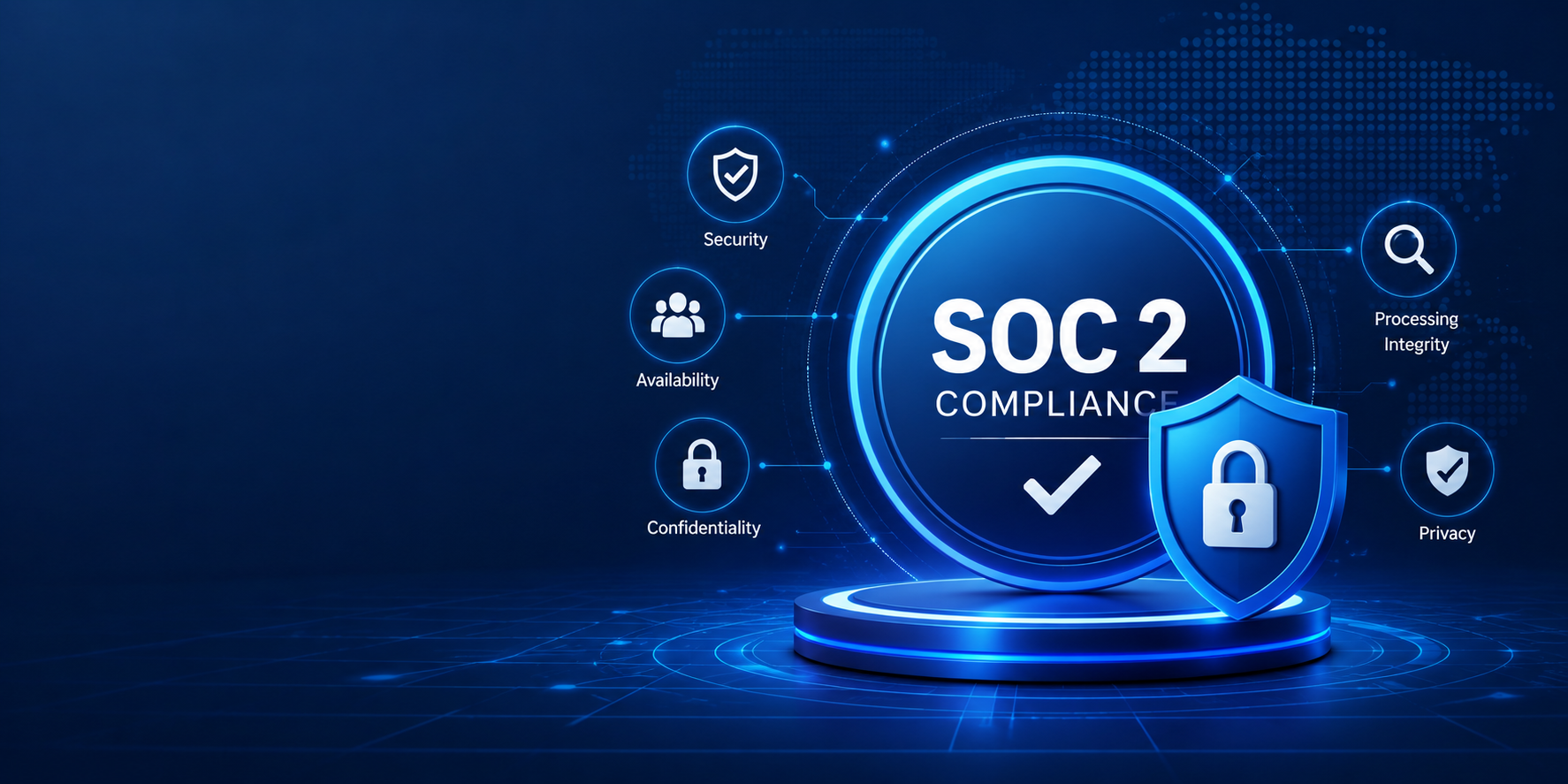
SOC 2 assessments are based on the Trust Services Criteria (TSC):
- Security
- Availability
- Processing Integrity
- Confidentiality
- Privacy
Unlike many compliance standards, SOC 2 does not prescribe one fixed set of controls. Instead, organizations design and implement controls appropriate to their business, technology, and risk profile. An independent CPA firm then evaluates whether those controls satisfy the selected Trust Services Criteria.
SOC 2 is widely adopted by:
- SaaS companies
- Cloud service providers
- Managed Service Providers (MSPs)
- FinTech companies
- Healthcare technology organizations
- IT service providers
- Data centers
What Is SOC 2 Type I?
SOC 2 Type I evaluates whether an organization’s security controls are appropriately designed on a specific assessment date.
During the audit, the CPA reviews policies, procedures, governance, and technical controls to determine whether they have been properly implemented.
Type I focuses on control design, not long-term performance.
Type I is ideal for:
- Startups
- Early-stage SaaS companies
- Organizations implementing SOC 2 for the first time
- Businesses preparing for enterprise sales
- Companies responding to customer security questionnaires
Advantages of SOC 2 Type I
- Faster than Type II
- Demonstrates commitment to security
- Provides a strong compliance foundation
- Helps identify control gaps before a Type II audit
- Supports early customer trust
What Is SOC 2 Type II?
SOC 2 Type II evaluates whether security controls are not only properly designed but also operate effectively over a defined observation period, usually between three and twelve months.
Instead of reviewing controls at a single point in time, auditors examine evidence collected throughout the audit period to verify that controls consistently function as intended.
Because it demonstrates ongoing operational effectiveness, Type II provides greater assurance to customers and stakeholders.
Type II is recommended for
- Mature SaaS companies
- Enterprise software providers
- FinTech organizations
- Healthcare companies
- Cloud infrastructure providers
- Managed Service Providers
- Organizations processing sensitive customer information
Advantages of SOC 2 Type II
- Higher customer confidence
- Stronger enterprise acceptance
- Demonstrates operational maturity
- Supports vendor security assessments
- Improves competitive positioning
SOC 2 Type I vs Type II Comparison
Feature | SOC 2 Type I | SOC 2 Type II |
Purpose | Evaluate control design | Evaluate design and operating effectiveness |
Assessment | Point in time | Over an observation period |
Observation Period | Not required | Usually 3–12 months |
Operating Effectiveness | No | Yes |
Evidence | Policies and implemented controls | Policies, controls, logs, and operational evidence |
Audit Duration | Shorter | Longer |
Level of Assurance | Moderate | High |
Enterprise Acceptance | Good | Preferred |
Which Report Should You Choose?
Choosing the right SOC 2 report depends on your organization’s maturity, customer expectations, and business goals.
Choose SOC 2 Type I if:
- You are beginning your SOC 2 journey.
- Your security controls have recently been implemented.
- Customers require an initial security assessment.
- You want to establish a foundation before pursuing Type II.
Choose SOC 2 Type II if:
- Enterprise customers require ongoing assurance.
- Your controls have been operating consistently for several months.
- You want to strengthen customer trust.
- Your organization regularly handles sensitive customer information.
- You are preparing for enterprise procurement or vendor reviews.
Can You Move from Type I to Type II?
Yes.
Many organizations begin with a Type I assessment to confirm that their controls are properly designed. After operating those controls consistently and collecting sufficient evidence, they undergo a separate Type II audit.
This phased approach helps organizations build a mature compliance program while reducing implementation risks.
Common Misconceptions
SOC 2 Type I is inferior.
Not at all. Type I validates that appropriate controls have been established. It is often the right first step for growing organizations.
SOC 2 Type II is permanent.
No. Organizations should continue maintaining effective controls and periodically obtain updated reports to demonstrate ongoing compliance.
Type I automatically becomes Type II.
No. Type II requires a separate audit covering an observation period.
SOC 2 is a certification.
Technically, SOC 2 is an independent attestation report, although many businesses informally refer to it as a certification.
Common Challenges During SOC 2 Audits
Organizations frequently encounter:
- Missing documentation
- Weak identity and access management
- Incomplete evidence collection
- Inconsistent policy implementation
- Limited employee security awareness
- Poor vendor risk management
- Delayed remediation of identified gaps
Addressing these issues before the audit significantly improves readiness and increases the likelihood of a successful outcome.
Best Practices for a Successful SOC 2 Journey
To improve audit readiness:
- Define the audit scope early.
- Conduct a gap assessment before implementation.
- Develop clear security policies and procedures.
- Maintain audit evidence continuously.
- Review access permissions regularly.
- Train employees on security responsibilities.
- Monitor vendors and third-party risks.
- Perform internal reviews before the formal audit.
Organizations that prepare proactively generally complete audits more efficiently and experience fewer remediation issues.
Frequently Asked Questions
Most startups begin with SOC 2 Type I because it demonstrates that appropriate controls have been established while providing a foundation for future Type II compliance.
Most enterprise customers prefer SOC 2 Type II because it demonstrates ongoing operational effectiveness rather than a one-time review.
The observation period typically ranges from three to twelve months, depending on the agreed scope and audit objectives.
Yes. Organizations with mature security controls and sufficient operational evidence can proceed directly to a Type II audit.
SOC 2 is not legally mandatory. However, many enterprise customers, investors, and business partners require a current SOC 2 report before entering commercial agreements.
How Prowise Systems Can Help
Prowise Systems offers comprehensive SOC 2 consulting services to assist organisations in preparing for successful Type I and Type II audits.
Our services include:
- SOC 2 readiness assessments
- Gap analysis
- Risk assessments
- Documentation and policy development
- Security control implementation
- Remediation support
- Audit preparation
- Continuous compliance guidance
Whether you are pursuing your first SOC 2 report or expanding your existing compliance program, our consultants help simplify the process while strengthening your organization’s security posture.
Conclusion
SOC 2 Type I and SOC 2 Type II serve different purposes, and choosing the right report depends on your organization’s current maturity, customer expectations, and long-term business objectives.
Type I demonstrates that appropriate controls have been designed and implemented, making it an excellent starting point for organizations beginning their compliance journey. Type II goes further by validating that those controls operate effectively over time, providing stronger assurance to customers, partners, and enterprise buyers.
If you’re planning your SOC 2 journey, starting with a readiness assessment can help identify gaps, prioritize improvements, and prepare your organization for a successful audit.
Ready to achieve SOC 2 compliance? Contact Prowise Systems to discuss your compliance goals and build a roadmap tailored to your business.