CMMI Level 3 Certification: Requirements, Process and Benefits for IT Companies
Achieving CMMI (Capability Maturity Model Integration) Level 3 is integral for IT and software companies to deliver quality projects, meet customer expectations, and scale operations. The Level 3 certification signifies a standardized approach that can be applied consistently across projects and tailored to specific requirements.
But what does CMMI Level 3 actually involve? What does an IT company need to achieve it and how can a consulting partner help?
So what is CMMI Level 3 Certification?
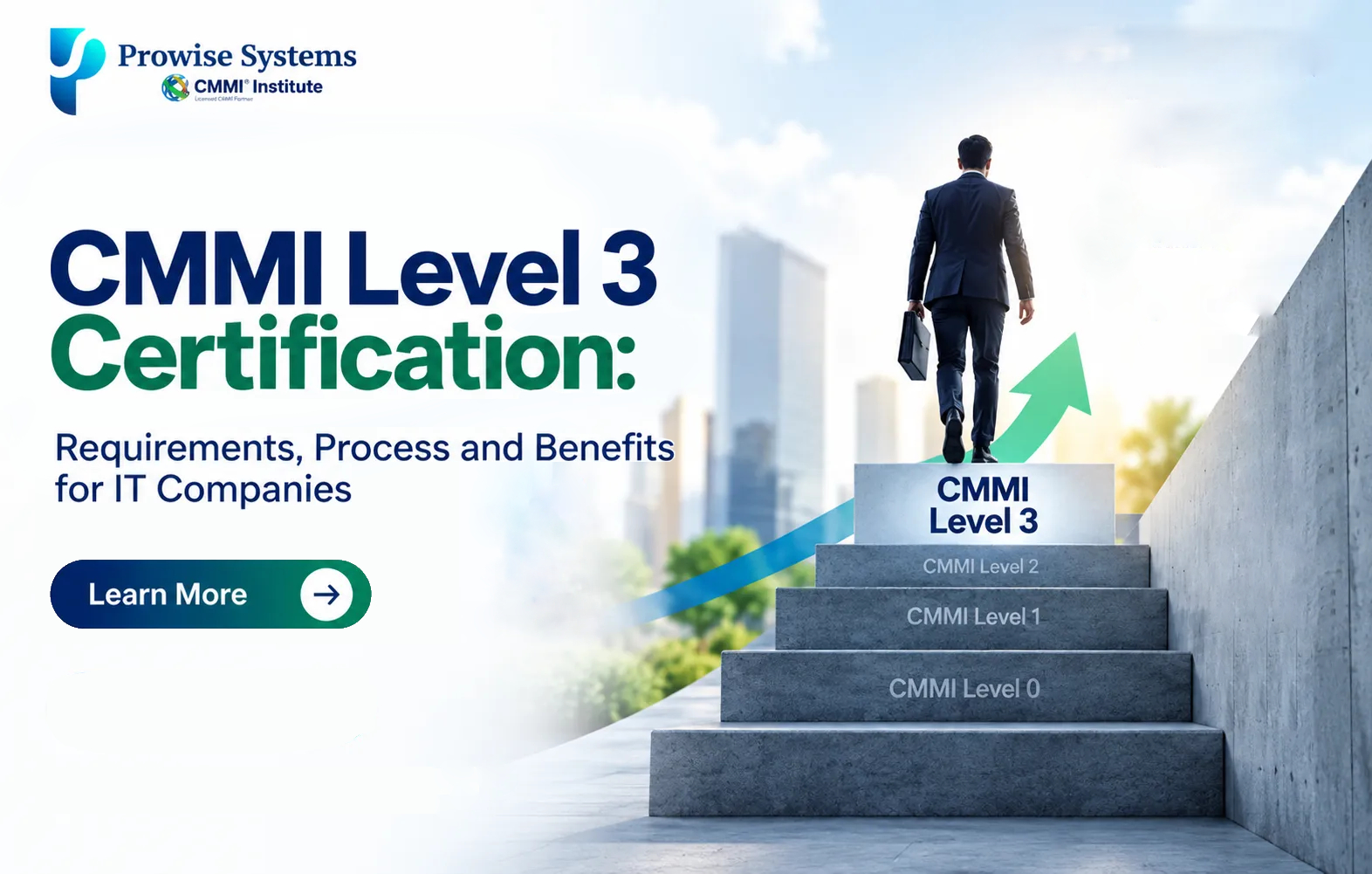
CMMI Level 3, known as the Defined maturity level, indicates that an organization has established standard processes that are documented, understood, and implemented across the organization.
CMMI Level 2 vs Level 3: What Changes?
The key difference between CMMI Level 2 and Level 3 is the extent to which processes are standardized across the organization.
Level 2 - Managed individual project level processes
Project teams establish processes that help them plan, monitor, and control their work. The focus is on making individual projects meet goals.
Level 3 - Defined organization-wide processes
The focus expands beyond individual projects. The organization establishes a common set of standard processes that can be used across projects. These processes are documented, maintained, and supported by organizational assets such as guidelines, templates, training materials, and methods.
For growing IT companies, this distinction becomes particularly important as the company scales. A process that works well for one project may not be sufficient when an organization needs to consistently deliver across multiple projects and teams.
What are the requirements for CMMI Level 3?
To meet the CMMI Level 3 certification criteria, software and engineering organizations need standard processes across several operational areas.
Key requirements include:
- Organization-wide Standard Processes (OSP): Processes carried out from project to project, standard software development lifecycle practices, coding, testing, and deployment guidelines must be documented and tailored to fit individual projects.
- Process infrastructure: The firm must establish process ownership, such as organizational process focus and delivery personnel.
- Organizational Process Assets: Reusable templates, guidelines, best practices, lessons learned, and other process assets should be available to support project teams.
- Evidence of implementation: Documentation alone is not enough. Organizations need objective evidence demonstrating that defined processes are being followed in actual project work.
- Defined Appraisal Scope: The organization must establish what parts of the business, projects, locations, and activities fall within the scope of the CMMI appraisal.
Step-by-Step CMMI Level 3 Certification Process
While the exact approach varies by organization, the journey usually includes these steps:
Define the scope and objectives
Identify the organization business goals, applicable CMMI requirements, organizational units, and projects that will be included.
Conduct a gap analysis
Evaluate existing processes and practices to identify any gaps between the current state of the projects and applicable CMMI expectations.
Define organizational processes
Develop or refine standard processes, procedures, templates, guidelines, and other assets.
Implement and tailor processes
Put defined processes into practice across relevant projects and tailor them where required.
Train teams and collect evidence
Ensure employees understand the processes and gather evidence showing that they are being implemented consistently.
Prepare for the appraisal
Review remaining gaps, address weaknesses, and assess the organization readiness for the formal appraisal.
Complete the formal appraisal
A qualified appraisal team evaluates the organization against the applicable CMMI model and scope.
What are the benefits of CMMI Level 3 for IT Companies?
With a CMMI Level 3 software and IT company, teams gain benefits beyond achieving a recognized maturity rating.
Consistent project execution
Teams work from a common organizational framework rather than developing processes independently for every project.
More predictable delivery
Standardized processes can reduce unnecessary variation in how projects are planned and executed.
Better knowledge sharing
Reusable organizational assets and lessons learned help teams benefit from previous project experience.
Greater customer confidence
A recognized CMMI maturity rating can demonstrate an organization commitment to structured process improvement.
Business opportunities
Certain enterprise and government procurement requirements may specify a CMMI maturity level, making it easier for companies to pursue such opportunities.
Common challenges in achieving CMMI Level 3
Some common challenges include inconsistent processes between teams, outdated or incomplete documentation, lack of employee awareness, and difficulty maintaining objective evidence of implementation. Teams may also struggle to balance organizational standards with the specific requirements of individual projects.
Another common issue is treating CMMI as a documentation exercise rather than a process improvement initiative. If not implemented properly, teams may find the effort difficult to follow in their day-to-day work.
Addressing these challenges early can make the appraisal process more manageable while helping organizations build processes that support the business and delivery goals.
Why should IT companies work with a CMMI Consulting Partner?
For IT business leaders thinking of preparing for CMMI Level 3 internally, fragmented processes, inconsistent documentation, and limited appraisal experience can make the journey more challenging.
A CMMI consulting partner can support organizations with gap assessments, process definition, implementation, employee training, evidence preparation, and appraisal readiness. The right partner can help teams build the processes that work in practice, beyond simply generating documents to satisfy the basic requirements.
ProWise Systems, a licensed CMMI consulting partner, helps IT organizations evaluate regulatory compliance with structured confidence. We can support the journey from assessing existing processes and addressing gaps to building appraisal readiness.
Frequently Asked Questions
What is CMMI Level 3?
CMMI Level 3, or Defined, means an organization has established standard processes that are implemented across projects and tailored to individual project needs.
Is CMMI Level 3 mandatory for IT companies?
No, CMMI Level 3 is not universally mandatory for IT companies. However, specific clients, contracts, tenders, or procurement requirements may require a particular CMMI maturity level.
How long does CMMI Level 3 certification take?
The timeline varies based on an organization existing process maturity, appraisal scope, size, and readiness.
Conclusion
CMMI Level 3 implementation provides a structured approach to identifying, managing, and reducing information security and process risks. The implementation journey can be summarized as:
Scope - Gap Analysis - Risk Assessment - Risk Treatment - Controls - Training - Operation - Internal Audit - Management Review - Improvement - Certification
The objective should not be to create documents simply for an audit. A successful CMMI program should operate as part of everyday business processes and continually improve as organizational risks change.
For organizations preparing for CMMI Level 3, ISO 27001, or ISO 27001 gap assessment, a practical starting point is identifying current maturity, priority gaps, applicable controls, and the roadmap toward certification readiness.
Need Help With CMMI Level 3 Certification?
Our CMMI consulting services can support gap analysis, implementation, risk assessment, statement of applicability, documentation, control implementation, internal audit, and certification readiness.
Get CMMI Level 3 support and start your implementation roadmap.
Frequently Asked Questions
What is ISO 27001 implementation?
ISO 27001 implementation is the process of establishing and operating an information security management system that meets ISO 27001 requirements.
What are the ISO 27001 implementation steps?
Common steps include defining scope, assessing risk, selecting controls, documenting procedures, training teams, performing internal audit, and preparing for certification.
How long does ISO 27001 implementation take?
The duration depends on organization size, scope, existing controls, documentation readiness, and internal resources.
Is ISO 27001 certification mandatory?
ISO 27001 is not always legally mandatory, but customers, contracts, or regulators may require it for certain business relationships.
What is the current ISO 27001 version?
The current major version is ISO/IEC 27001:2022.
Can small businesses implement ISO 27001?
Yes. Small businesses can implement ISO 27001 by defining a practical scope and applying controls appropriate to their risks and operations.